

Minerality in Wine
Are you Really "Tasting the Soil?"

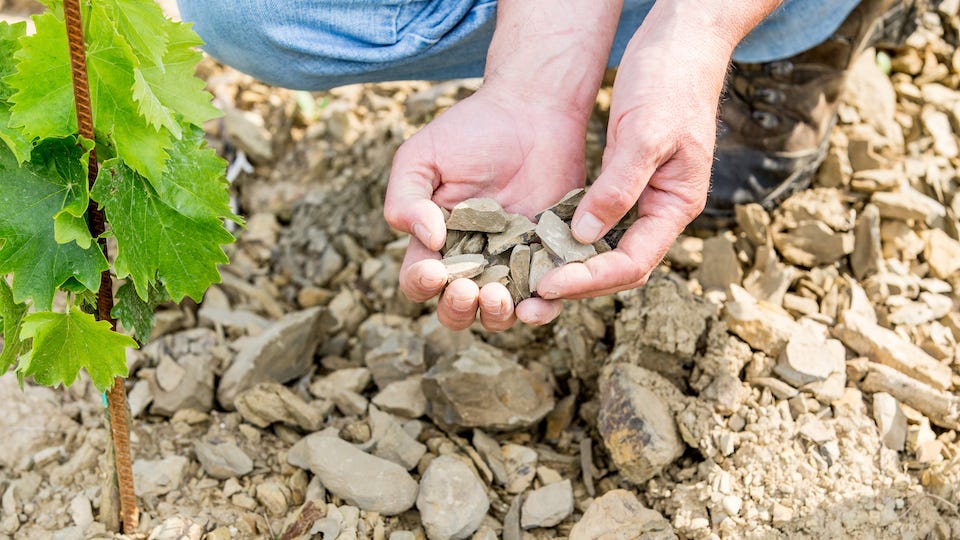
If you spend time reading wine reviews, talking with sommeliers, or attending tastings, you’ll eventually hear the word “minerality.” It’s one of the most frequently used (and most debated) terms in modern wine language. Tasters often describe wines as stony, flinty, chalky, or even salty, suggesting an almost geological character in the glass. But what does minerality actually mean? Are we literally tasting the rocks beneath the vineyard? The short answer is no. Yet the idea behind minerality is still meaningful and useful. It helps explain why certain wines feel crisp, precise, and energetic rather than fruity, rich, or plush. Understanding minerality requires separating wine myth from wine science while appreciating the real influence of a vineyard’s environment.
The Myth of “Tasting the Soil”
One of the most persistent ideas in wine culture is that grapes absorb flavors from the soil, meaning wines grown in limestone or granite somehow taste like those rocks. In reality, the concept of terroir, the environmental influence of a vineyard, is real, but the mechanism is different from what many people imagine. Grapevines do absorb minerals from the soil. These include nutrients such as potassium, magnesium, nitrogen, and phosphorus. However, these minerals are essential for vine health, not flavor. The compounds responsible for aroma and taste in wine primarily come from:
The natural chemistry of the grapes
Fermentation processes
Yeast activity
Winemaking techniques
Aging conditions
Scientific research, including work by geologist and wine scholar Alex Maltman, shows that the minerals absorbed by vines do not taste like rocks in finished wine. Still, soil remains extremely important. Different soil types influence:
Water drainage and retention
Root depth and vine stress
Heat retention
Ripening speed
Acidity levels in grapes
These factors shape the grapes’ chemistry, which ultimately influences how a wine tastes. So, while you’re not literally tasting limestone or slate, the vineyard environment still leaves a distinct imprint on the wine.
What Wine Professionals Mean by Minerality
When sommeliers and critics describe minerality, they’re usually referring to sensations and impressions, not literal mineral flavors. Common descriptors include:
Wet stone after rain
Crushed rocks or flint
Chalk dust or limestone
Sea spray or saltiness
A clean, steely finish
These qualities tend to appear in wines that feel tight, precise, and refreshing rather than lush or fruit-heavy. Mineral-driven wines often emphasize structure and acidity, giving them a mouth-watering freshness that many wine lovers find compelling. Certain regions are famous for wines that regularly show mineral-like qualities. For example, white wines from Chablis, Sancerre, and Mosel are frequently described as mineral. These areas share two important characteristics: cool climates and high natural acidity, both of which enhance the perception of minerality. Different soil types often appear in these regions and contribute to the growing conditions that shape the wine.
Limestone: common in Burgundy and Champagne, limestone soils retain moisture while still providing excellent drainage. Wines from limestone vineyards often show bright acidity and chalky impressions.
Slate: widely found in Germany’s Mosel, slate absorbs heat during the day and releases it at night. This helps grapes ripen in cooler climates while preserving acidity, often resulting in wines described as crisp, steely, and precise.
Volcanic Soils: regions such as Santorini, Mount Etna, and parts of Napa Valley feature volcanic soils. Wines from these areas sometimes show smoky, savory, or saline qualities.
Schist and Granite: found in parts of the Loire Valley and Northern Rhône, these soils are often associated with wines described as stony, tense, or “wet-rock” in character.
Again, the soil itself does not flavor the wine. Instead, it shapes the growing conditions that influence grape chemistry.
Beyond the vineyard, winemaking choices can either emphasize or mask mineral-like qualities. Many producers seeking to highlight a wine’s site expression use techniques designed to preserve freshness and clarity. For example, the use of stainless-steel during fermentation prevents external flavors (like vanilla or toast from oak barrels) from overshadowing the wine’s natural character. Additionally, allowing wines to rest on its lees (spent yeast cells) adds texture and complexity. Many wines from Chablis gain subtle saline and chalky impressions through this method. Avoiding heavy filtration, excessive additives, malolactic fermentation, or aggressive oak aging allows the vineyard’s character to remain visible with minimal intervention.
So, perhaps the big question is, “how to taste minerality?”
For people new to the concept, identifying minerality can be tricky. It’s rarely the dominant characteristic in a wine. Here are a few helpful tips to get you on your way:
Focus on texture. Mineral-driven wines often feel tense or slightly grippy rather than soft and round.
Look for subtle aromas. Hints of wet stone, sea breeze, or rain-soaked earth may appear quietly in the background.
Pay attention to acidity. High-acid wines tend to feel lively and mouth-watering; a sensation closely tied to minerality.
Compare wines side by side. Try tasting a crisp Chablis, a Mosel Riesling, or an Rías Baixas Albariño next to a richer, fruit-forward white. The contrast can make mineral qualities much easier to notice.
Wait, what about red wines? Although minerality is most often discussed in white wines, it can also appear in reds as impressions of graphite, iron, or savory tension beneath the fruit. For example, wines from Priorat in Spain often show a slate-like edge, while a Beaujolais grown on granite can feel fresh and stony. Wines from Mount Etna sometimes display smoky, savory notes linked to volcanic soils.
Why the Term Is Still Debated
Even among professionals, minerality remains controversial. Some critics argue the term is too vague and lacks scientific definition, while others believe it’s a valuable shorthand for describing a specific sensory experience. Master Sommelier and winemaker Rajat Parr offers a nuanced perspective in the book The Sommelier’s Atlas of Taste (co-written with Jordan Mackay). Parr suggests thinking of minerality as “electricity.” Instead of literal minerals, he describes a sensation of energy, tension, and vibration on the palate created by acidity and balance. This view aligns with Maltman’s research, which suggests minerality works best as a metaphor, a poetic way to describe wines that evoke the smell or sensation of stones and metals.
Wherever you land on this, the bottom line is that minerality may not literally come from rocks in the soil, but it captures something very real about how wine tastes and feels. It’s a way of describing wines that are crisp, restrained, and deeply expressive of their environment. And once you begin to notice it, minerality becomes one of the most fascinating—and delicious—dimensions of exploring wine.