
Wine Book Recommendations
Who's ready to nerd out a little?

For those who know me, it’ll come as no surprise that I have a habit of peering just a bit closer (and maybe digging a touch deeper) into all the tiny, fascinating details that shape not only how wine is made, but how it comes to life in the first place. Early on in my wine journey, I felt that to truly appreciate wine, it’s not enough to simply taste it, you have to understand the why, where, and how behind every bottle. The “why” reveals the choices and natural forces that shape a wine’s character, from climate to human intention; the “where” grounds it in place, connecting flavor to landscape, soil, and region; and the “how” uncovers the craftsmanship, from vineyard practices to cellar decisions, that transforms grapes into something expressive and alive. When these three elements come together, wine becomes more than a drink and it becomes a story you can see, smell, and taste in every glass. So instead of sticking to wine reviews or technical sheets, I picked up a couple of books that really spoke to that curiosity and desire to dig deeper, which hopefully might resonate with others.
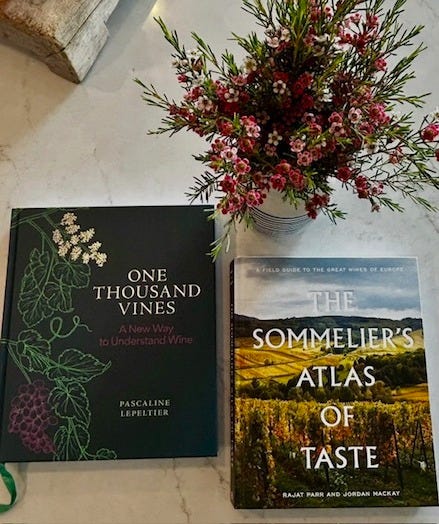
The two books I recommend for anyone looking to deepen their understanding of wine, not just as a beverage, but as a cultural and sensory experience, are One Thousand Vines: A New Way to Understand Wine, and, The Sommelier’s Atlas of Taste: A Field Guide to the Great Wines of Europe. These books stand out as two essential and highly complementary reads that approach wine from different angles, but together they offer a richer, more complete perspective than either could alone.
Here’s where these books make wine truly fun and fascinating: if you’ve ever wondered why two wines can taste worlds apart, or how to confidently choose a great bottle without guessing, these guides will show you how. Take, for example, a Bordeaux Merlot versus a California Merlot. By diving into their regions, soils, climates, and the winemakers’ touch, these books deepen your appreciation of the where, why, and how behind each wine/varietal. They might even inspire you to explore new wines and regions you hadn’t considered before. And with that, let’s dive into the pages.
One Thousand Vines, written by French sommelier Pascaline Lepeltier, challenges many of the assumptions that underpin traditional wine education. Rather than organizing wine knowledge around grape varieties or regions in a rigid, textbook fashion, Lepeltier encourages readers to think in terms of ecosystems. Her approach emphasizes the interplay between soil, climate, biodiversity, and human intervention, reframing wine as a living expression of place. This perspective invites readers to move beyond memorization and toward a more intuitive and holistic understanding of how wines come to be. The book also engages with broader themes such as sustainability and agricultural ethics, making it especially relevant in a time when environmental concerns are reshaping the wine industry. One Thousand Vines
In contrast, The Sommelier’s Atlas of Taste by celebrated Sommelier, turned winemaker, Rajat Parr and writer/author Jordan Mackay offers a more structured, region-focused exploration of European wines. It serves as both a guide and a training tool, helping readers understand the defining characteristics of classic wine regions such as Burgundy, Barolo, and the Mosel. What sets this book apart is its emphasis on sensory experience. Rather than simply listing facts, it teaches readers how to recognize the “taste signatures” of different places—how a wine’s structure, texture, and aromas reflect its origin. This makes it particularly valuable for those looking to improve their tasting skills or develop confidence in identifying wines, whether casually or in a professional context. Additionally, its recommendations of notable producers provide a practical bridge between theory and real-world exploration. The Sommelier’s Atlas of Taste
Taken together, these two books offer a powerful combination of philosophy and practice. One Thousand Vines reshapes how readers think about wine at a conceptual level, encouraging them to ask deeper questions about origin, environment, and intention. The Sommelier’s Atlas of Taste, meanwhile, grounds that thinking in concrete examples, helping readers translate abstract ideas into sensory recognition and informed choices.
Neither book is “too technical” for a general wine lover, but they do differ in approach. One Thousand Vines can feel dense at times as it explores terroir, ecology, and philosophy in depth, so it rewards slower, thoughtful reading. However, it is visually rich, filled with color illustrations, conceptual maps and scientific diagrams that bring topics like soil, vine biology, and terroir to life, making complex ideas easier to grasp. The Sommelier’s Atlas of Taste is more accessible and practical, focusing on regions and taste profiles you can immediately relate to in the glass. It is more of a descriptive exploration of classic European regions, using narrative and sensory detail rather than relying heavily on maps or visuals. Together, they balance visual learning and regional understanding, giving readers both a picture of how wine works and a sense of where it comes from.
Together, they’re challenging enough to expand your understanding without being overwhelming—especially if you approach them with curiosity rather than trying to master every detail. Ultimately, reading both works allows wine enthusiasts to move from simply enjoying wine to truly understanding it. They foster a mindset that connects taste with place, and knowledge with experience—an approach that lies at the heart of meaningful wine appreciation.
Happy reading!